
Why make something new?

Why do we create? Do we have to? In a world where AI can generate images in seconds and every idea feels like it’s already been explored, the question lingers… why make something new?

“The object of art is not to make salable pictures. It is to save yourself.” – Sherwood Anderson

Do we create for validation? Does selling a piece make it better? Will applause help? What if someone were to bestow on us the title of “original”? Could we keep it?
I’m not sure that art is about being first or best. I do know that it’s about being authentic. No machine can replicate the hesitations and doubts that come through in our work, the weight of a memory embedded in our choice of color, or the irrational drive to create something because that something won’t let you rest until you do.

Art isn’t about proving yourself to the world. It’s about making sense of the world within you.

Some of the most powerful paintings have never been sold. Some will be discovered by a generation yet to come. The greatest pieces of art emerge from our solitude. They resonate universally, revealing truths we weren’t even sure we needed to share. Art is here to help us process, reflect, and sometimes, just breathe.

.
Inspiration Friday - Why Make Something New?

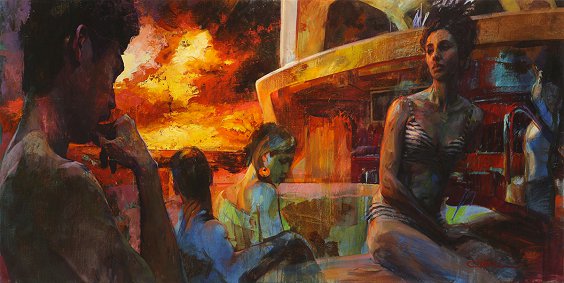
Birth of Athena – Gabriel Mark Lipper – 48″x96″ – Mixed Media on Linen

A painting doesn’t have to be seen by the world to matter. Its value isn’t measured by its price tag or number of likes. Art’s relevance is born from the act of its making. The way colors collide unexpectedly, or the way a brush stumbles over a heavily textured canvas. The feeling that overwhelms us when a single mark has changed everything.

So if and when you find yourself questioning whether your art is “worth it” or will ever be “good enough” remember that it already is. Because the act of creating is enough. That’s the whole point.
 

What has your art helped you process?

Do you create for yourself or for an audience?

What would you make if no one was watching?

Can the refuge of your studio fuel your courage?

When I paint, I paint because I need to. The act of creating art isn’t about smearing paint on canvas or dragging pencil over paper. My studio is the place where I go to reset and reflect, and if all goes well, (and I really hope it does) a place to get better at being human.

“I found the world to be woefully lacking in safe places. So, I became one.” – J. Warren Welch

This world of polarization and absolutes is no place for an artist. Beauty doesn’t need to be right, and compassion isn’t something to take advantage of. Our art is a refuge.

Art gives us a way to process the chaos around us without being consumed by it. When we take time to create, we’re not avoiding hard truths or sticking our heads in the sand. It’s easy enough to see what’s going on. We’re holding space for something more powerful and less obvious. Our art reminds us that creation, not destruction, is the work that will heal us.

The beauty of this creative space is that it’s yours to shape.  Within it, you can confront the noise of the outside world, not by shouting louder but by being reminded that you still have agency, there’s permission to explore, to stumble, to try again. Art doesn’t require you to get it right the first time. But this kind of work takes courage. It asks us to confront the parts of ourselves we’d rather ignore, to sit with the discomfort of not having answers, and to stay present to the act of creating.

.

8paint Inspiration Friday - Can the refuge of your studio fuel your courage?

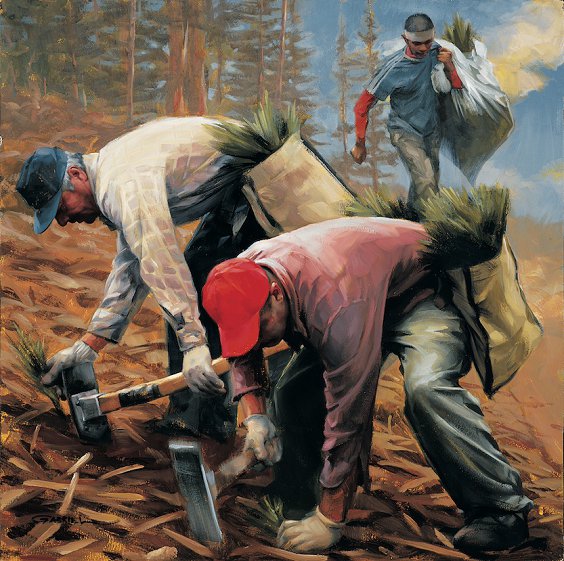
Seeds of Hope – Northwest Seasonal Workers Association

It’s a shift. Instead of blaming, we’re building. Art teaches us that the process matters more than the outcome. The imperfections, the revisions, the moments of doubt, they’re all part of what makes the work whole. When we cultivate that sense of wholeness within ourselves, it has a way of radiating outward.

In a world full of cynicism, creating is an act of hope. And, like covid and ignorance, hope is also contagious.


How can your art inspire connection instead of division?

What truth are you ready to express through your art?

Can the refuge of your studio fuel your courage?

How do you go from the messy middle to masterpiece?

Do ever get stuck in the middle, overwhelmed by the weight of your own expectations?

“Do not fear mistakes. There are none.” – Miles Davis

My masterpiece feels so real and close, so full of potential. But the chasm between my vision and the reality of what sits in front of me looms large.

We all stop short, the passion we have for our creation makes the idea of failure almost unbearable. But pushing through “just OK“ is the most important part of the process. Each brushstroke, or musical note, moves us closer to discovering what the piece wants to become.

This is where the real work begins. Starting a piece is thrilling, filled with possibility. But the middle? The middle is messy. It’s where doubt creeps in, claiming that you’ve lost your way. It’s also where breakthroughs happen. The melody of a great painting or composition comes from embracing the tension. We won’t find the solution in the back of the fridge or waiting for us on our phone.

.

8paint Inspiration Friday - How do you go from the messy middle to masterpiece

The messy middle

Creativity thrives on improvisation. Our notes and brushwork may not always land where we expect them to, but they’re there to lead us somewhere new if we stay present and open. Mistakes, or what we call mistakes, are part of the rhythm.

The key is to keep playing. Like the musician, we get to improvise and respond to an unexpected chord-change. The notes might feel off at first, but there’s a thread of harmony there. It’s waiting to emerge in ways that we never could have anticipated.

So grab a snack and check your email, but then get back to it. Those moments of dissonance aren’t dead ends. They’re opportunities to explore, to adjust, and to listen to what the painting is trying to tell you.


What keeps you from continuing when a piece feels stuck?

How do you find your way back into the rhythm of a painting?

How do you go from the messy middle to masterpiece?