Are you in “just one more thing” purgatory?

Creativity isn’t linear. Learning isn’t linear. Most of the lines I draw aren’t even very linear. So how do we take some of the ideas swirling around in our subconsious and turn them into real paintings?

“Deadlines and things make you creative.” – Jack White

There’s a sneaky, obstructive comfort zone we’re all familiar with… the “just one more thing” purgatory. A half-finished painting is still brimming with possibility. It could be a masterpiece! It could be terrible! No one knows! Until suddenly it’s 3 a.m., you’ve repainted the whole thing twice, and your painting now looks exactly like it did five hours ago (but somehow worse).
8paint Inspiration Friday are you in just one more thing purgatory

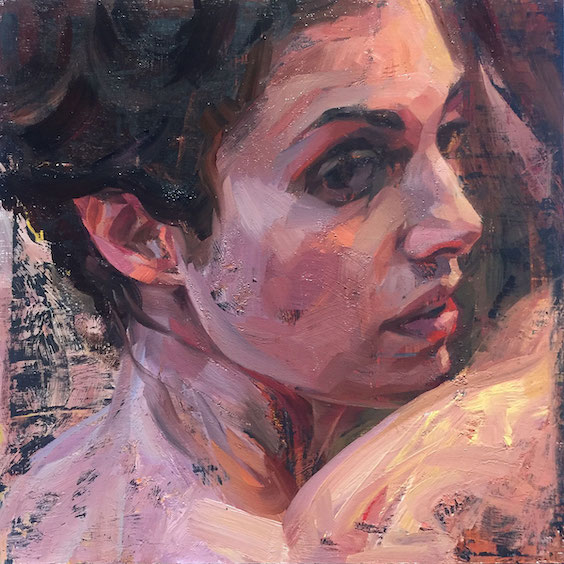
Robyn 2 – Gabriel Mark Lipper – Oil on Panel  – 12″x12″

The muse is notoriously unreliable. But you know what always shows up on time? A deadline. Deadlines don’t just force us to finish; they force us to decide. With unlimited time, we tinker, we tweak, we stare into the void of possibility. But when the clock is ticking, we don’t have the luxury of overthinking. We trust our instincts. We commit.

That’s the magic of constraints. When we’re down to the wire, suddenly we see solutions that weren’t there before. Maybe they were always there, we just needed to exert some pressure to get ourselves past the overanalysis.

So if you’re struggling to finish something, set a deadline. Tell a friend, schedule an open studio, invent a fake exhibition and then send out postcards. Just get a date on the calendar. Because at the end of the day, creativity isn’t about waiting for inspiration. It’s about showing up, putting in the work, and, occasionally, letting a little panic do its job.


Do deadlines help or hinder your creativity? (they help)

If you had one hour to finish a current piece, what would you focus on?

Are you “just one more thing” purgatory?


Are your eyes playing tricks on you?

Seeing is more than just using our eyes. It’s about interpretation, understanding, and the stories we tell ourselves about what’s in front of us.

“The question is not what you look at, but what you see.” – Henry David Thoreau

Two people can look at the same landscape, the same model, the same light falling across a still life, and walk away with completely different experiences.

As artists, our job isn’t simply to record what’s in front of us, where is the artist in that? We’re here to breath in the world and respond with our own voice. That’s the assignment, but that doesn’t make it an easy one. Our minds want shortcuts, we want to name things (eye, nose, tree, shadow) and move on. We assume shadows are black and trees are green. But shadows shimmer with color, and trees hold every shade from lavender to ochre.

When our paintings are based on shorthanded assumptions, the work becomes generic and sterile. But when we truly observe, and respond with authenticity, our work has life. Life comes with empathy, it comes with frustration and fear. It’s charged with passion, love, and many other ineffable truths. For most of us, those truths aren’t easy to express and that’s why we get to paint.

One exercise that helps me to escape the lure of assumption is to break out the sketchbook. The whole world is reduced to a series of positive and negative shapes. Any preconceived notions about what those shapes are falls away as I begin to draw. Slowing down, taking the time to observe and sift through the details and minutiae to reveal the essence of what’s I’m front of me. It’s a different way of seeing. I have to shift from assumption to observation and allow my drawing to shape my experience.


8paint Inspiration Fridays Citrus Still Life

Still Life’s are great because we don’t care about getting a perfect likeness.


The next time you’re drawing something, try drawing all of the shapes that surround your subject. Instead of trying to draw the eye and then the nose, what shape does the space between the eye and the nose make? Drawing from a photo? Turn it upside down and see if those shapes aren’t just a little bit more obvious when you don’t know what you’re looking at. This is a great way to let go of what we think we know and to take some steps closer to seeing the truth of what exists in front of us.


How often do you notice assumptions in your work?

How do you move beyond your assumptions?

Do your assumptions need glasses?


Let’s start before we feel ready.

We don’t start with talent and it doesn’t show up one day with all of the answers. It’s born from a willingness to try and a readiness to move.

“The beginning is the most important part of the work.” – Plato

Over the last couple of weeks I’ve watched the snow melt away, watched as the earth softens and the colors reemerge. I’ve been bracing myself against the cold this winter but today I left my house without a jacket. And it wasn’t that bad.

Let’s start before we feel ready, before we’ve figured it all out. Let’s trust that whatever we create will lead us somewhere we need to go.

I know how easy it is to hesitate, to overthink, to let self-doubt slip in and take the reins. It tells us to wait, to prepare more, to hold off until we’re sure. But certainty never comes first. It comes after the work, in the rhythm of making, in the discovery that only happens when we engage.


Inspiration Friday Let's start before we feel ready.


The best paintings, the most powerful breakthroughs, come not from hesitation but from risk, from being willing to lay something down, even if it’s wrong. Adjustments can be made. New layers can be added. The beauty is in the process.

Let’s step into this new season with bold strokes.

Paint Tuff!
Gabriel


What new beginning is waiting for you?

What would you create if doubt didn’t hold you back?

Where will you begin?

Inspiration Friday! Let's start before we feel ready.